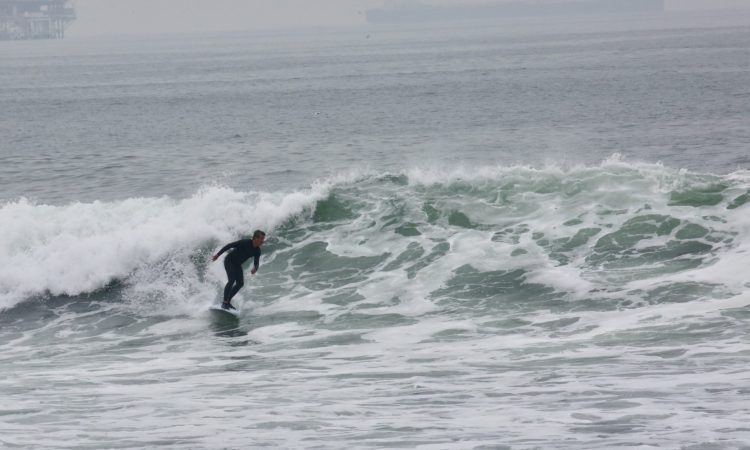
Anyone who has tried surfing knows how hard it is at the beginning. You paddle, miss waves, get knocked around, and wonder if you’ll ever stand up. Then you get lucky and catch one. You find your balance. The connection is made. For some, they come back to get better, for a few like me, the addiction has set it’s hook.
For a while, it feels like you’ve figured it out. Like anything in life the more you put into surfing the better you get. 40 years and 15 surfboards later, I was getting pretty good.
Then the waves change. Or you get a new board. Suddenly, the things you learned don’t work quite the same way, and you’re back to struggling. You have to adjust, learn again, and find your footing. That cycle keeps repeating. Some stretches are harder than others, but that’s life isn’t it?
Recently, I paddled out in surf that was forecast at six to eight feet. After missing a good-looking eight-foot right, I saw the next monster coming toward me. My choices seemed simple: paddle in and get crushed for sure, or paddle out, take it head-on and hope to get through quickly before it peaks.
As I reached the face of the wave, a back wave lifted it suddenly and tossed me backward. Instinct took over. I pushed away from my board and curled into a ball to protect my head. As I shifted position, I caught a quick glimpse of the drop below me. In that moment, it looked like four stories. Witnesses later estimated it at fifteen or sixteen feet.
When I hit the water, the wave swallowed me. At first, I took comfort in the tug of my leash. My board was still attached. I trusted it would help me find the surface.
Then the tug disappeared.
My leash had broken. Now I had only my own buoyancy to bring me back up. After what felt like an eternity, I surfaced, exhaled, and tried to breathe. Foam hit me in the face as I inhaled. My lungs were filling with water, and I had to figure out where I was: more than a quarter mile from shore, with another set on its way.
I watched my surfboard get pushed toward the beach. Just above it, four pickleball players were taking a break. They were betting on whether I’d make it. I could hear my Dad saying “Never give up.”
When I finally reached shore, I coughed up as much water as I could, grabbed my board, and stumbled toward the showers. No one said a word.
The next morning, my lungs still sore, I sat and looked at the waves. They had grown bigger and angrier. I decided my return to the battle could wait. The pickle ball players wandered over to tell me how I looked from their viewpoint. Let’s just say it wasn’t pretty and they already dialed 911.
Life and business have their own sets. You learn how to handle one kind of challenge, build confidence, and start to feel steady. Then the conditions change. The market shifts. A new role asks more of you. A plan you trusted stops working. Suddenly, you’re a beginner again.
That doesn’t mean you’ve lost everything you learned. It means you have to read the conditions, adjust, and decide what the moment calls for. Sometimes you paddle through. Sometimes you take the wave head-on. And sometimes the wisest move is to wait for a better day.
The waves will change again. So will we.